Antique wool U.S. Medical Corps, cattle marker glass beads, cotton fabric
86” x 65”
“Akbaleeíassee translates to guardian; literally, “someone who watches over us.”
“Akbaleeíassee- Green Blanket”
In the modern era, wool blankets like Pendletons are integrated into every aspect of our Apsáalooke existence, given at birth & in grief, in dispute, in celebration, and presented in honor.
Blankets came to our Nations by many roads, arriving initially as gifts and trade goods, then evolving to rations and treaty annuities, and at times even as carriers of disease. While making this work during the COVID pandemic, I learned of a 1838 smallpox epidemic that devastated the Crow people in what is presently known as Southeastern Montana.
Elders tell of scaffold burials resting in the “Eagle” sandstone cliffs, tied to trees and buried in caves or overhangs above what is now downtown Billings, remembered in Apsáalooke oral histories and physically onsite in a single small plaque. At the same time, every other cemetery in the city is watered, pruned, and kept. That contrast stayed with me as I watched my own relatives endure COVID at rates few communities experienced in this country.
Two centuries apart, two sicknesses asked our people the same question this blanket asks now: who watches over us?”
Antique wool U.S. Medical Corps, cattle marker glass beads, cotton fabric
86” x 65”
“Akbaleeíassee translates to guardian; literally, “someone who watches over us.”
“Akbaleeíassee- Green Blanket”
In the modern era, wool blankets like Pendletons are integrated into every aspect of our Apsáalooke existence, given at birth & in grief, in dispute, in celebration, and presented in honor.
Blankets came to our Nations by many roads, arriving initially as gifts and trade goods, then evolving to rations and treaty annuities, and at times even as carriers of disease. While making this work during the COVID pandemic, I learned of a 1838 smallpox epidemic that devastated the Crow people in what is presently known as Southeastern Montana.
Elders tell of scaffold burials resting in the “Eagle” sandstone cliffs, tied to trees and buried in caves or overhangs above what is now downtown Billings, remembered in Apsáalooke oral histories and physically onsite in a single small plaque. At the same time, every other cemetery in the city is watered, pruned, and kept. That contrast stayed with me as I watched my own relatives endure COVID at rates few communities experienced in this country.
Two centuries apart, two sicknesses asked our people the same question this blanket asks now: who watches over us?”

 Image 1 of 14
 Image 2 of 14
 Image 3 of 14
 Image 4 of 14
 Image 5 of 14
 Image 6 of 14
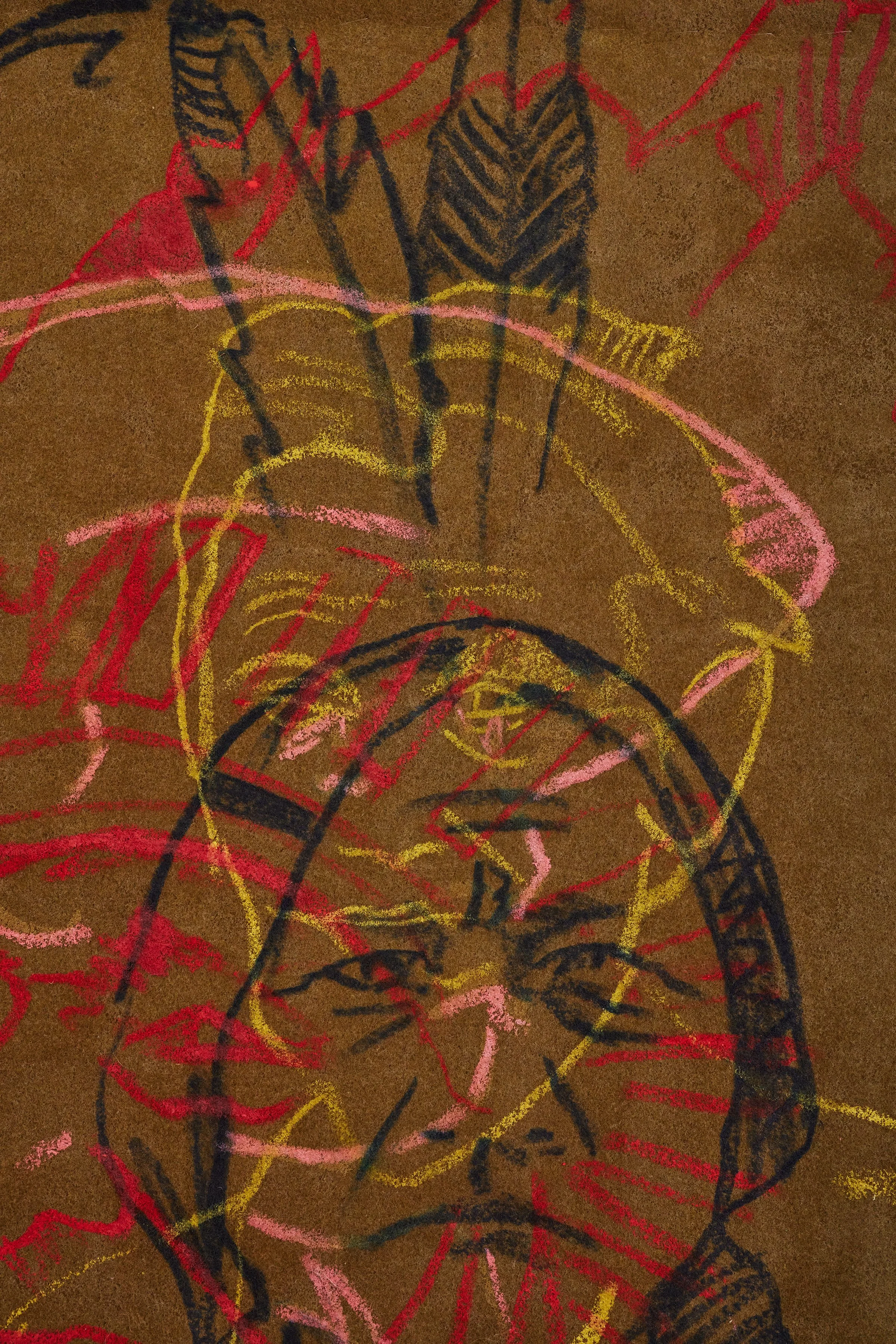 Image 7 of 14
 Image 8 of 14
 Image 9 of 14
 Image 10 of 14
 Image 11 of 14
 Image 12 of 14
 Image 13 of 14
 Image 14 of 14